Coffee Grind Size: The Complete Guide for Every Brewing Method
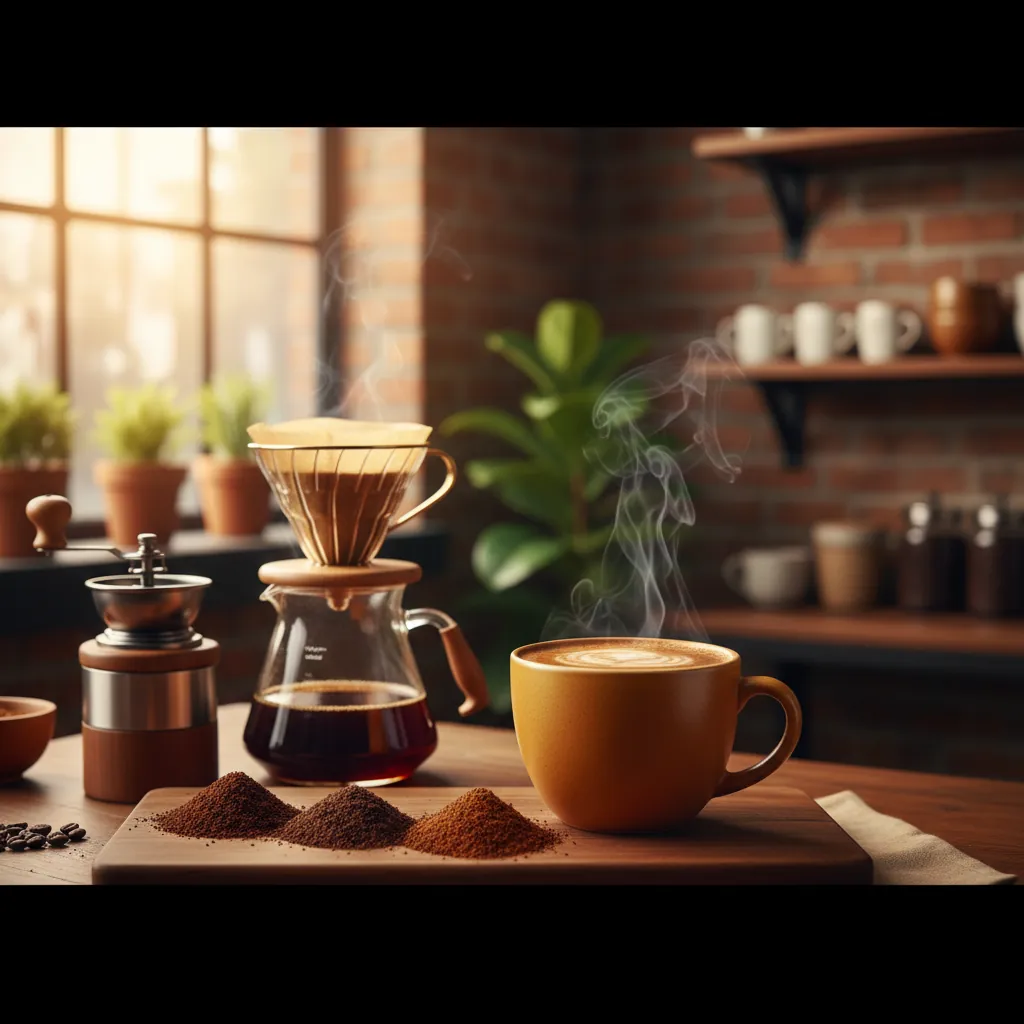
Coffee Grind Size: The Complete Guide for Every Brewing Method
Contents
The best coffee grind size depends entirely on your brewing method. For espresso, use a fine grind (180-380 microns), similar to table salt, to ensure proper extraction under pressure. Pour-over methods like V60 need a medium grind (400-950 microns) resembling beach sand, while French press requires coarse grounds (800-1100 microns) like sea salt. Turkish coffee demands the finest powder (40-220 microns), and cold brew needs extra-coarse particles (1200-1500+ microns). Always adjust grind size based on taste: sour coffee needs a finer grind, while bitter coffee needs a coarser one.
What You’ll Need
- Coffee beans: Fresh, high-quality whole beans
- Burr grinder: For consistent particle size
- Brewing equipment: Specific to your method (e.g., French press, espresso machine)
- Water: Filtered, at the right temperature (195-205°F for most methods)
- Scale: For precise coffee-to-water ratios (typically 1:15 to 1:17 for most methods)
Step-by-Step
- Choose your brewing method: Determine whether you’re making espresso, pour-over, French press, etc.
- Set your grinder: Adjust to the recommended starting point for your method (see table below).
- Weigh your coffee: Use 15-20g of coffee for every 250ml of water (adjust to taste).
- Brew: Follow your method’s specific brewing process.
- Taste and adjust: If coffee is sour, grind finer; if bitter, grind coarser.
Coffee Grind Size Comparison Table
| Brew Method | Grind Size | Micron Range (µm) | Texture Comparison |
|---|---|---|---|
| Turkish Coffee | Extra Fine | 40–220 | Powdered sugar/flour |
| Espresso | Fine | 180–380 | Table salt |
| Moka Pot | Fine-Medium | 360–660 | Fine sand |
| AeroPress | Medium-Fine | 320–960 | Slightly coarser than salt |
| Pour-Over (V60) | Medium | 400–950 | Beach sand |
| Drip Coffee | Medium | 300–900 | Regular sand |
| French Press | Coarse | 800–1100 | Sea salt |
| Cold Brew | Extra Coarse | 1200–1500+ | Crushed peppercorns |
Tips
- Grind fresh: Always grind beans right before brewing for maximum flavor.
- Small adjustments: Change grind size in small increments (especially for espresso).
- Water temperature: Use 195-205°F for optimal extraction.
- Clean your grinder: Residue from old beans can affect flavor.
Common Mistakes
- Using pre-ground coffee: Pre-ground loses freshness quickly and may not match your brewing method.
- Inconsistent grind: Blade grinders create uneven particles, leading to uneven extraction.
- Ignoring taste cues: Sour or bitter flavors are clear indicators to adjust grind size.
- Wrong grind for the method: Using espresso-fine grind for French press will over-extract.
Variations
- AeroPress: Can use finer grinds for shorter brews or coarser for longer steeps.
- Chemex: Requires a slightly coarser grind than V60 due to thicker filters.
- Siphon Brewers: Work best with medium-fine grinds (similar to pour-over).
FAQ
How do I know if my grind size is wrong?
- Sour/weak coffee: Grind is too coarse (under-extracted).
- Bitter/harsh coffee: Grind is too fine (over-extracted).
Can I use the same grind size for all methods?
No. Each brewing method requires a specific grind size to control extraction time and flavor.
Why does my pour-over drain too slowly?
Your grind is likely too fine, causing clogging. Try a coarser setting.
How much should I adjust my grinder?
For espresso, make tiny adjustments (one click at a time). For other methods, adjust in small increments.
Does roast level affect grind size?
Darker roasts are more porous and extract faster, so you may need a slightly coarser grind than for light roasts.
Related guides
- How to Brew Coffee with an AeroPress: A Complete Guide
- How to Brew Coffee with a Chemex: Clean, Crisp, and Balanced
- Coffee to Water Ratio: The Complete Brewing Guide
- How to Make Drip Coffee: A Complete Guide