Coffee Blooming Explained: Why and How to Do It
Coffee Blooming Explained: Why and How to Do It
Contents
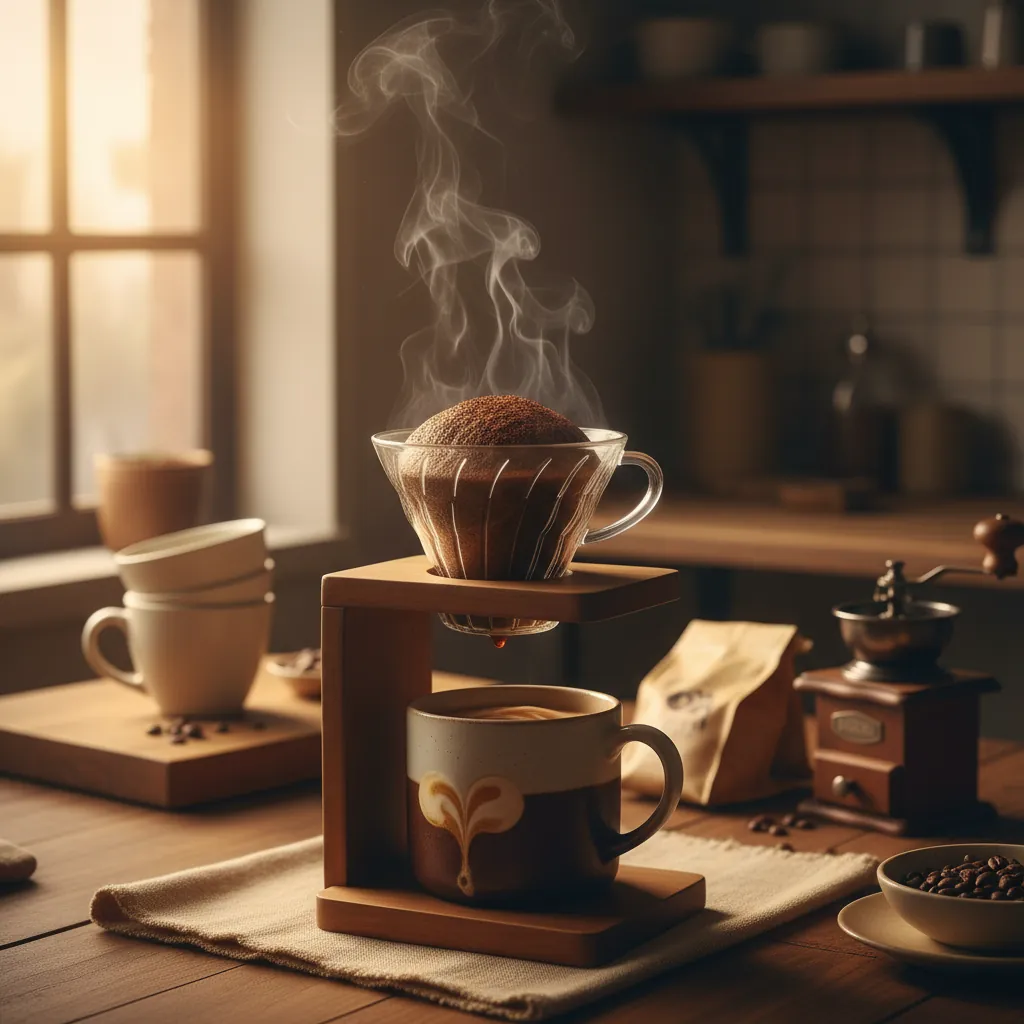
Coffee blooming is the process of pre-wetting fresh coffee grounds with hot water (typically 1:2-1:3 coffee-to-water ratio) for 30-45 seconds before full brewing. This releases trapped carbon dioxide from recently roasted beans, improving extraction and flavor. Visible bubbling indicates freshness—stale coffee won’t bloom well. Essential for pour-over and French press, beneficial for all methods, and critical for light-roast espresso.
What You’ll Need
- Fresh coffee beans (roasted within 2 weeks; avoid pre-ground)
- Burr grinder (for consistent grounds; Baratza Encore recommended)
- Gooseneck kettle (for precise pouring; Mcilpoog Warrior 1.7L suggested)
- Scale (to measure coffee and water ratios)
- Filter/brewer (pour-over cone, French press, etc.)
- 195–205°F filtered water (just off-boil)
- Timer (30-45 second bloom)
Step-by-Step
- Grind 15-30g beans to medium-fine (pour-over) or coarse (French press) immediately before brewing.
- Add grounds to filter/brewer. Shake to level the bed.
- Pour 2-3x the coffee weight in hot water (e.g., 30g coffee → 60-90g water). Start at center, spiral outward.
- Wait 30-45 seconds as bubbles form (CO2 escaping). Swirl gently if dry spots remain.
- Continue brewing with remaining water using your normal method.
Why Blooming Matters
| Benefit | How It Works |
|---|---|
| Better extraction | CO2 repels water; degassing lets water penetrate grounds evenly |
| Enhanced flavor | Prevents uneven extraction sourness/bitterness |
| Freshness test | Vigorous bubbles indicate recently roasted beans (stale coffee barely blooms) |
Common Mistakes
- Using stale beans: Low bloom activity means flat flavors.
- Incorrect water ratio: Over 1:3 coffee-to-water dilutes extraction; under 1:2 leaves dry spots.
- Skipping the timer: <30s under-blooms; >60s over-extracts (Source 4’s tests show 40s ideal for pour-over).
- Boiling water: Scorches grounds; 205°F max for balanced extraction.
Variations by Method
- Espresso (Source 5): 30s “blooming shot” with pre-infusion at 4-5 bars, then 9 bars pressure. Best for light/medium roasts.
- French press: Stir crust after bloom before full immersion (Source 2).
- Cold brew: Bloom with room-temp water (conflict: Source 1 says hot water required; Source 2 implies any temp).
FAQ
Q: Can I skip blooming?
A: Yes, but expect uneven extraction (sour/bitter notes) with fresh coffee.
Q: Why no bloom with dark roasts?
A: They degas faster naturally (Source 5 warns against blooming espresso for dark roasts).
Q: How much water for bloom?
A: 2-3x coffee weight (Sources 1, 2 agree; Source 4’s tests favor 1:2 for pour-over).
Q: My coffee didn’t bloom—is it bad?
A: Possibly stale (Source 3), or very dark roast (degassed already). Taste to confirm.
Conflict: Source 1 claims blooming helps “all coffee brewing methods,” while Source 5 discourages it for dark-roast espresso.
Related guides
- Aeropress Brew Guide
- How to Brew Coffee with an AeroPress: A Complete Guide
- ☕ AeroPress Coffee Brewing Guide
- How to Make an Iced Americano: A Simple, Refreshing Coffee Drink
- Coffee Grind Size: The Complete Guide for Every Brewing Method