Coffee Grind Size Chart: The Ultimate Guide for Perfect Brewing
Coffee Grind Size Chart: The Ultimate Guide for Perfect Brewing
Contents
- What You’ll Need
- Step-by-Step
- How Does Grind Size Affect Coffee Flavor?
- Comparison Table: Coffee Grind Size by Brewing Method
- Tips for Perfect Grinding
- Common Mistakes
- Variations in Grind Size
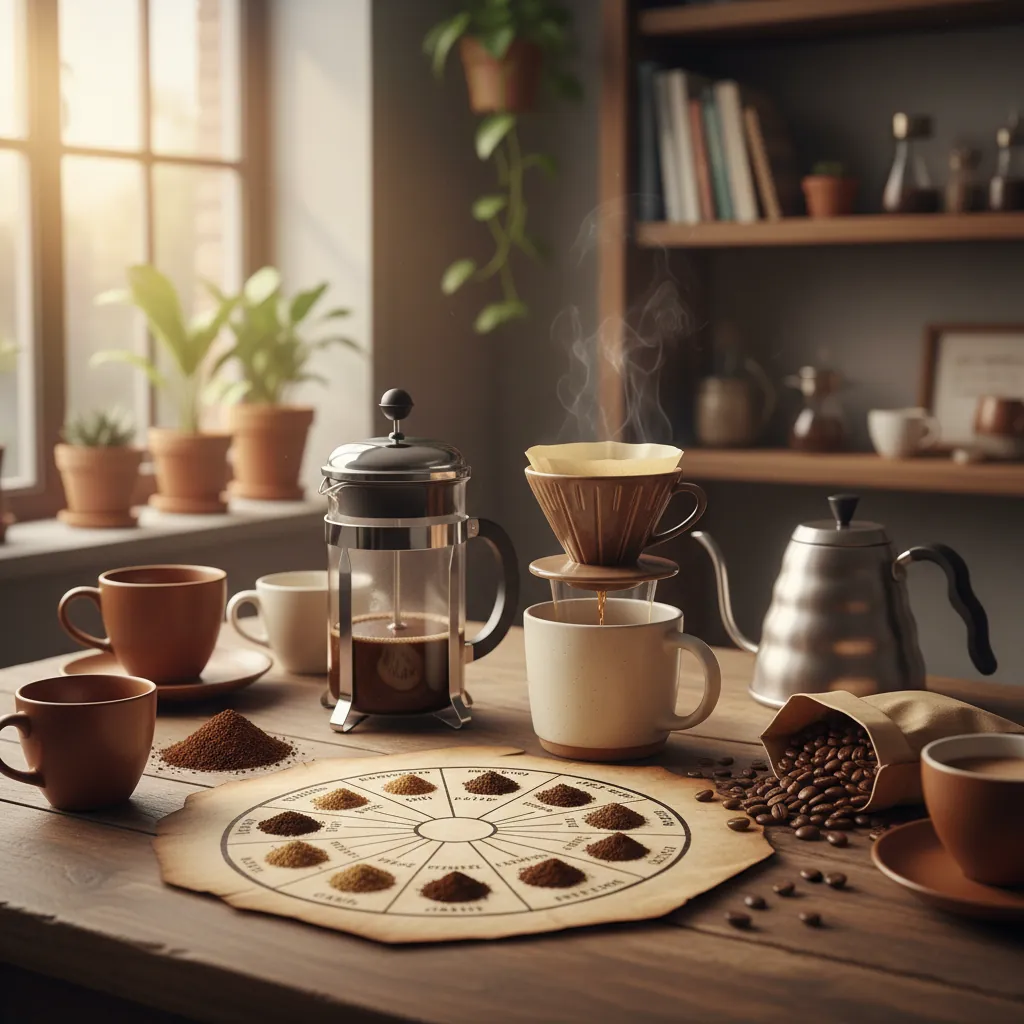
The coffee grind size chart is essential for matching your brewing method to the correct grind, ensuring balanced extraction and optimal flavor. Grind size directly impacts brew time, flow rate, and extraction efficiency. Fine grinds (e.g., espresso) extract quickly due to higher surface area, while coarse grinds (e.g., French Press) suit longer immersion times without over-extraction. Use a burr grinder for consistency and grind fresh before brewing for the best results.
What You’ll Need
- Equipment: Burr grinder, brewing device (e.g., French Press, espresso machine, pour-over), scale, timer
- Coffee amount: Typically 10-15g per 250ml of water
- Grind size: Match your brewing method (see chart below)
- Water ratio: 1:15 coffee-to-water ratio (e.g., 15g coffee to 225g water)
Step-by-Step
- Select your brewing method (e.g., French Press, espresso, pour-over).
- Set your grinder to the recommended grind size for your method.
- Measure your coffee and water using a scale for accuracy.
- Grind your coffee just before brewing to preserve freshness.
- Brew according to your method’s guidelines, adjusting grind size as needed for flavor balance.
How Does Grind Size Affect Coffee Flavor?
Grind size determines extraction efficiency and brew time. Finer grinds increase surface area, speeding up extraction, which is ideal for short brew methods like espresso. Coarser grinds slow extraction, preventing bitterness in long-brew methods like cold brew. Incorrect grind size can lead to under-extraction (sour, weak coffee) or over-extraction (bitter, harsh coffee).
Comparison Table: Coffee Grind Size by Brewing Method
| Brewing Method | Grind Size | Particle Size (µm) | Consistency Similar To |
|---|---|---|---|
| Turkish Coffee | Extra Fine | 100-200 | Flour |
| Espresso | Fine | 200-300 | Powdered sugar |
| Aeropress | Medium Fine | 300-500 | Table salt |
| Pour-Over (V60) | Medium | 500-800 | Beach sand |
| Drip Coffee | Medium | 500-800 | Beach sand |
| French Press | Coarse | 800-1200 | Coarse sea salt |
| Cold Brew | Extra Coarse | 1200-1600 | Rock salt |
Tips for Perfect Grinding
- Use a burr grinder for consistent particle sizes.
- Adjust grind size incrementally based on taste (finer for sour, coarser for bitter).
- Grind fresh before brewing to preserve aroma and flavor.
- Clean your grinder regularly to avoid stale coffee residue affecting flavor.
Common Mistakes
- Using pre-ground coffee: Pre-ground coffee loses freshness quickly due to oxidation.
- Incorrect grind size: Mismatched grind size leads to unbalanced extraction (sour or bitter).
- Blade grinders: Inconsistent grind sizes result in uneven extraction.
- Ignoring grind adjustments: Brewing variables like humidity and bean density require grind tweaks.
Variations in Grind Size
Different brewing methods require specific grind sizes for optimal results. For example:
- Espresso: Fine grind for quick extraction under high pressure.
- French Press: Coarse grind to prevent grounds from passing through the mesh filter.
- Cold Brew: Extra coarse grind for long immersion without bitterness.
FAQ
What is the best grind size for espresso?
Espresso requires a fine grind (200-300 µm) for quick extraction under high pressure.
Can I use coarse grind for pour-over?
No, pour-over typically requires a medium grind (500-800 µm) for balanced extraction and flow rate.
How do I fix bitter coffee?
A bitter taste often indicates over-extraction; try a coarser grind or shorter brew time.
Should I grind coffee finer for a stronger flavor?
Yes, finer grinds increase extraction, but adjust gradually to avoid over-extraction.
Can I use a blade grinder?
Blade grinders are less consistent than burr grinders; for best results, invest in a burr grinder.
Related guides
- Aeropress Brew Guide
- How to Brew Coffee with an AeroPress: A Complete Guide
- ☕ AeroPress Coffee Brewing Guide
- How to Make an Iced Americano: A Simple, Refreshing Coffee Drink