How to Descale an Espresso Machine
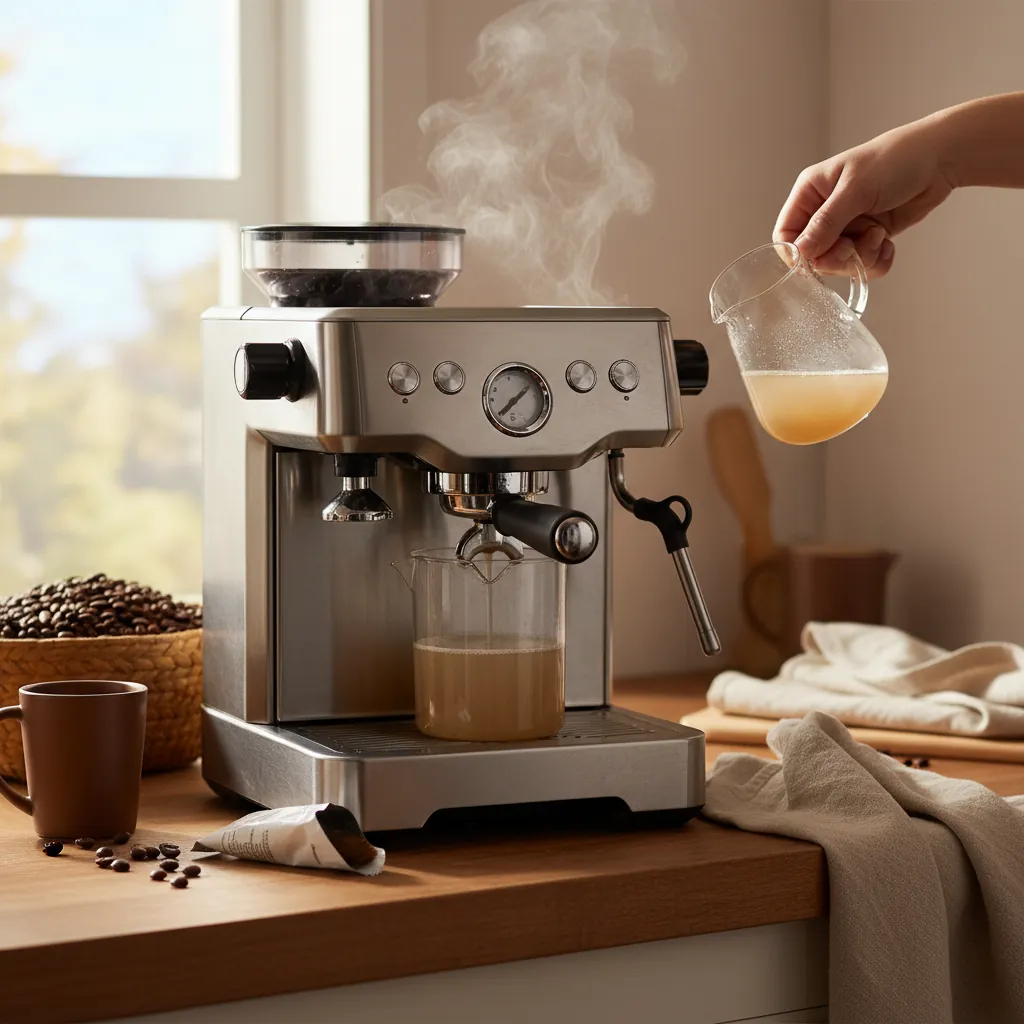
How to Descale an Espresso Machine
Contents
Descaling your espresso machine removes mineral buildup inside the boiler and water paths, ensuring optimal performance and longevity. To descale: dissolve a manufacturer-approved descaling solution in water, run the solution through the machine’s internal system, then rinse thoroughly with fresh water. Most machines need descaling every 1–3 months, depending on water hardness and usage.
Regular descaling prevents reduced water flow, inconsistent espresso extraction, and internal damage. Follow these steps to keep your machine in top condition.
What You’ll Need
To descale your espresso machine, gather the following:
- Manufacturer-approved descaling solution (check your manual for recommended products)
- Fresh water
- Large container to catch water during the process
- Clean cloth or towel
- Optional: Water hardness test strips to determine frequency
Step-by-Step
Follow these steps to descale your espresso machine:
-
Prepare the Machine:
- Empty the drip tray and water tank. Remove any water filters.
-
Mix the Descaling Solution:
- Fill the water tank with fresh water and add the descaling solution according to the manufacturer’s instructions (usually 1 part solution to 1 liter of water).
-
Start the Descaling Cycle:
- Place a large container under the group head and steam wand to catch liquid.
- Enter descale mode (consult your manual; some machines require holding specific buttons).
-
Run the Solution Through the Machine:
- Allow the machine to cycle the descaling solution through the group head, steam wand, and hot water spout. This typically takes 5–10 minutes.
-
Rinse Thoroughly:
- Empty the water tank and rinse it thoroughly.
- Refill with fresh water and run multiple rinse cycles to flush out any remaining descaling solution.
-
Finish:
- Exit descale mode and wipe down the machine. Replace the water filter if applicable.
Tips
- Use manufacturer-recommended descalers to avoid damaging internal components.
- Set reminders to descale regularly based on your water hardness and usage.
- Avoid vinegar unless specified by the manufacturer, as it can damage seals and leave odors.
Common Mistakes
- Using the Wrong Product: Vinegar or household cleaners can corrode internal parts. Stick to espresso-specific descalers.
- Incomplete Rinsing: Residual descaling solution can affect taste and damage parts. Always rinse thoroughly.
- Ignoring Warning Signs: Reduced steam pressure, slower flow, or off-tasting espresso indicate it’s time to descale.
Variations
Some machines have built-in descaling programs for automatic cycles. For semi-automatic machines, follow the manual’s instructions carefully. Fully automatic machines often guide you through the process via on-screen prompts.
FAQ
How often should I descale my espresso machine?
Descale every 1–3 months for home use, depending on water hardness. For commercial machines, follow the manufacturer’s maintenance schedule.
Can I use vinegar instead of a descaling solution?
Avoid vinegar unless your manufacturer explicitly recommends it. Vinegar can damage seals and leave lingering odors.
What happens if I don’t descale my machine?
Mineral buildup can reduce water flow, alter espresso flavor, and damage internal components like heating elements and boilers.
How do I know when to descale?
Signs include slower shot times, weaker steam pressure, visible white residue, or a descale alert on your machine’s display.
Can I descale my machine without a descaling solution?
No, descaling solutions are specifically formulated to dissolve mineral buildup without harming internal parts.
Related guides
- How to Froth Milk at Home Without Expensive Equipment
- How to Grind Coffee Beans for the Best Brew
- How to Brew Coffee with an AeroPress: A Complete Guide
- Coffee Grind Size: The Complete Guide for Every Brewing Method
- How to Make a Caramel Macchiato at Home