How to Make a Latte at Home: A Complete Guide
How to Make a Latte at Home: A Complete Guide
Contents
To make a latte at home, brew 1-2 shots of espresso, steam 6-8 oz of milk to 140-150°F until frothy, then combine them in a 1:3 espresso-to-milk ratio. Use whole milk or oat milk for best frothing, and consider adding vanilla, caramel, or other flavorings. No espresso machine? Substitute strong brewed coffee or instant espresso.
What Is a Latte?
A latte is an espresso-based drink with steamed milk and a thin layer of foam. It has the highest milk content among espresso drinks, making it creamier and milder than a cappuccino or macchiato. Standard lattes contain about 125mg of caffeine (for two shots) but can be customized with decaf or flavor syrups.
What You’ll Need
- Espresso: 1-2 shots (or 1/3 cup strong coffee)
- Milk: 3/4 cup whole milk (or oat/almond milk for dairy-free)
- Optional:
- Sweeteners (sugar, honey, syrup)
- Flavors (vanilla, caramel, cinnamon)
- Cocoa powder or whipped cream
Equipment:
- Espresso machine or strong coffee maker
- Milk frother (or a whisk/jar for manual frothing)
- Thermometer (for milk at 140-150°F)
- Mug or latte glass
Step-by-Step
-
Brew the espresso:
- Use finely ground dark or medium roast beans.
- Extract 1-2 shots (about 30-60ml) into your cup. No machine? Use a Moka pot or 1/3 cup strong coffee.
-
Steam and froth the milk:
- Heat 3/4 cup milk to 140-150°F (60-65°C).
- Froth until velvety with tiny bubbles (~30 sec with a frother). Whole milk froths best; oat milk is the top dairy-free alternative.
-
Combine:
- Pour steamed milk into espresso, holding back foam with a spoon.
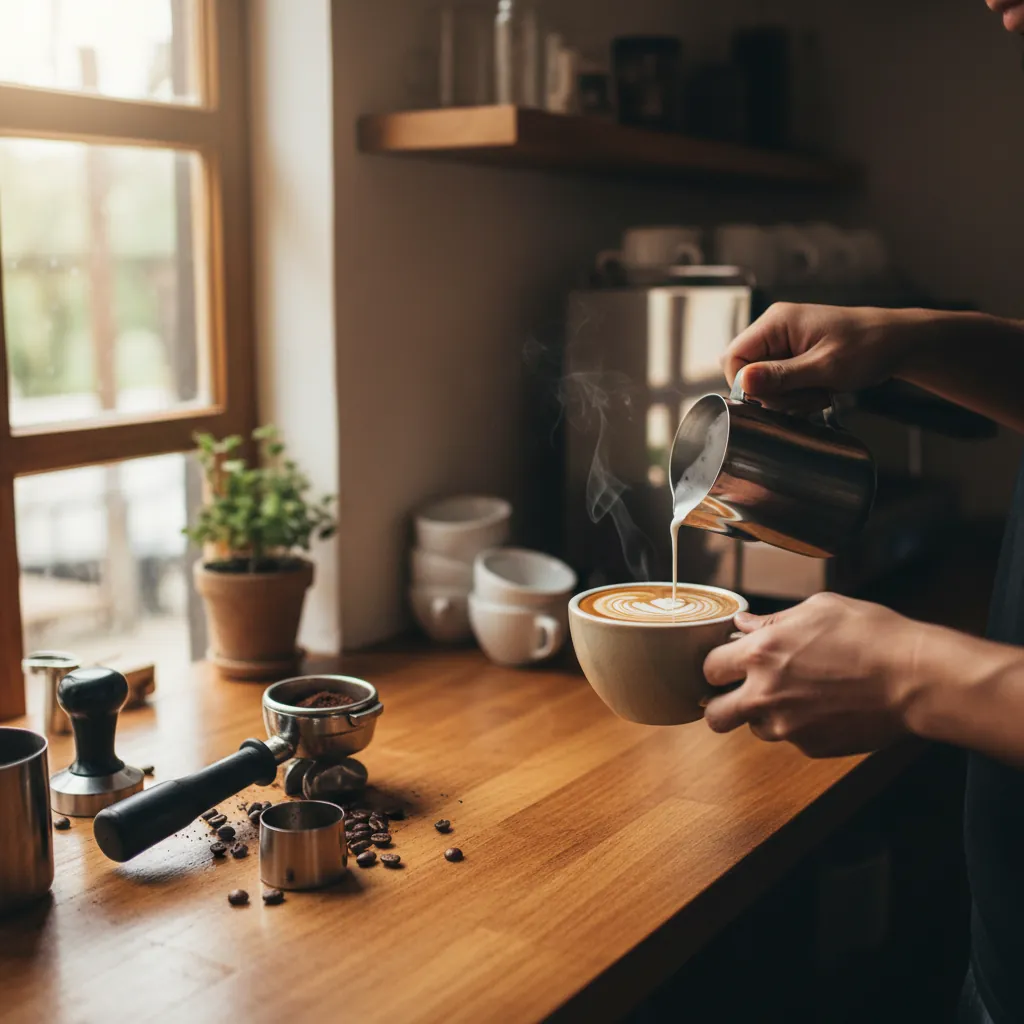
- Top with a thin layer of foam. For latte art, pour slowly from a height.
-
Customize:
- Stir in syrups or spices (e.g., vanilla, pumpkin spice).
- Dust with cocoa or cinnamon.
Tips for the Best Latte
- Milk temperature: Stop heating at 150°F to avoid burning.
- Milk choice: Whole milk yields creamiest foam; oat milk mimics its texture best.
- Espresso: Brew freshly ground beans for bold flavor that cuts through milk.
- Iced variation: Skip frothing; mix espresso with cold milk and ice.
Common Mistakes
- Overheating milk: Scalds it, ruining sweetness (stay under 160°F).
- Weak espresso: Use a fine grind and proper pressure for concentrated flavor.
- Too much foam: Lattes should have a thin layer, unlike cappuccinos.
- Incorrect ratio: Aim for 1:3 espresso to milk (e.g., 1 shot to 6 oz milk).
Variations
| Variation | Key Adjustments |
|---|---|
| Vanilla Latte | Add 1 tsp vanilla syrup |
| Mocha Latte | Mix 1 tbsp cocoa powder into espresso |
| Iced Latte | Use cold milk and ice; no frothing |
| Pumpkin Spice | Add pumpkin puree + spice mix |
| Matcha Latte | Replace espresso with 1 tsp matcha |
FAQ
Can I make a latte without an espresso machine?
Yes! Use strong brewed coffee (1/3 cup) or instant espresso, and froth milk with a whisk or jar.
What’s the difference between a latte and a cappuccino?
Cappuccinos have equal parts espresso, steamed milk, and foam (1:1:1), while lattes are 1:3 espresso to milk with a thin foam layer.
How do I make dairy-free lattes?
Oat milk froths best; almond or soy milk work but yield less foam.
Why is my latte bitter?
Over-extracted espresso or burnt milk (over 150°F) can cause bitterness.
Can I make a latte ahead of time?
No—espresso oxidizes and milk separates. Brew fresh.
Related guides
- How to Make Espresso: A Complete Guide
- How to Brew Coffee with an AeroPress: A Complete Guide
- How to Brew Coffee with a Chemex: Clean, Crisp, and Balanced
- Cold Brew Coffee: A Complete Guide
- How to Make French Press Coffee