Light Roast vs. Dark Roast Coffee: Flavor, Caffeine, and Brewing Guide
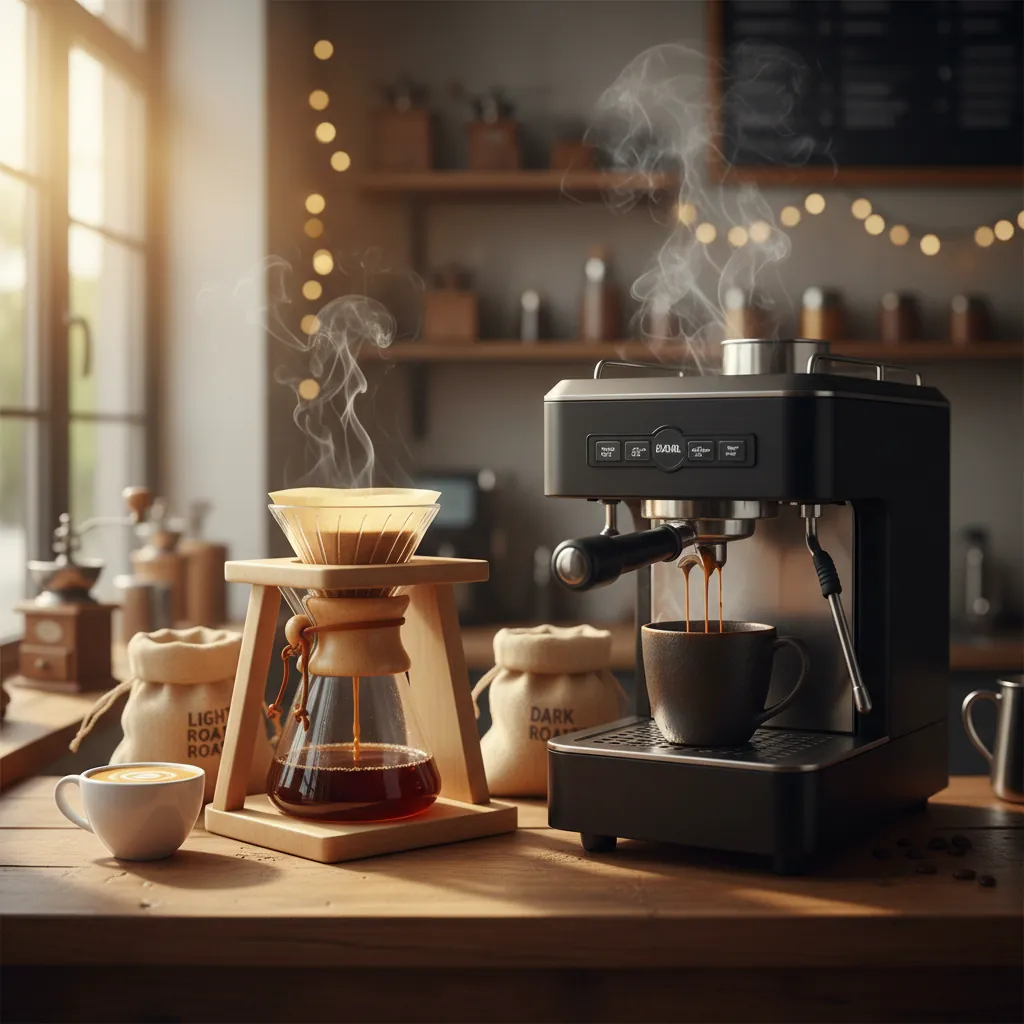
Light Roast vs. Dark Roast Coffee: Flavor, Caffeine, and Brewing Guide
Contents
- What You’ll Need
- Step-by-Step
- Flavor Comparison
- Roasting Process Differences
- Caffeine Content
- Brewing Tips
- Common Mistakes
- Variations
Light and dark roast coffees differ primarily in roast time and temperature, not bean origin. Light roasts (350-400°F for ≤10 minutes) retain brighter, fruitier flavors, while dark roasts (400°F+ for ~15 minutes) develop bolder, smokier notes. Though dark roasts lose slight caffeine during roasting and expand in size, caffeine differences are minimal when measured by weight.
What You’ll Need
- Fresh coffee beans (light or dark roast)
- Grind: Medium-fine for pour-over, fine for espresso
- Water ratio: 1:16 coffee-to-water (e.g., 20g coffee to 320g water)
- Equipment: Scale, grinder, brewer (pour-over, French press, or espresso machine)
- Water temperature: 195-205°F (lighter roasts benefit from higher temps)
Step-by-Step
- Heat water to 195-205°F.
- Grind beans (adjust fineness per brew method; light roasts may need finer).
- Pre-wet filter (if using pour-over) to remove paper taste.
- Add coffee grounds, then pour water in circular motions for even extraction.
- Brew time: 2-4 minutes for pour-over, 4 minutes for French press.
- Serve immediately for best flavor.
Flavor Comparison
| Feature | Light Roast | Dark Roast |
|---|---|---|
| Taste | Fruity, floral, citrus | Smoky, chocolatey, nutty |
| Acidity | Higher, bright | Lower, smoother |
| Body | Lighter, tea-like | Fuller, creamy |
| Bean Appearance | Light brown, dry | Dark brown, oily |
Roasting Process Differences
- Light roast: Stops after “first crack” (~390°F), preserving origin flavors.
- Dark roast: Continues to “second crack” (~440°F), developing caramelized oils.
Caffeine Content
While dark roasting slightly reduces caffeine, the difference is negligible when measured by weight. Dark roast beans expand, so volume-based measurements (e.g., scoops) may yield less caffeine per cup.
Brewing Tips
- Light roast: Use higher water temps (205°F) to extract complex flavors.
- Dark roast: Try slightly cooler water (195°F) to avoid over-extracting bitterness.
Common Mistakes
- Using stale beans (optimal within 2 weeks of roasting)
- Incorrect grind size (too coarse = weak; too fine = bitter)
- Inconsistent water temperature
Variations
- Espresso: Dark roasts traditionally used, but light roasts work with finer grinds.
- Cold brew: Dark roasts yield smoother results; light roasts need longer steep times.
FAQ
Which roast is stronger?
Dark roast tastes bolder due to smoky flavors, but caffeine content is nearly equal by weight.
Is light roast healthier?
Light roast retains more antioxidants (chlorogenic acids), while dark roast reduces pesticides and fungal toxins. Paper filtering removes cholesterol-raising compounds regardless of roast.
Best for espresso?
Dark roasts are traditional, but light roasts can produce brighter, fruitier shots.
Why does my dark roast taste bitter?
Over-extraction or high water temps can exaggerate bitterness. Try a coarser grind or shorter brew time.
What’s best for beginners?
Dark roasts offer familiar, smooth flavors; light roasts appeal to those seeking complex acidity.
Related guides
- How to Store Coffee Beans for Maximum Freshness
- How to Brew Coffee with an AeroPress: A Complete Guide
- How to Brew Coffee with a Chemex: Clean, Crisp, and Balanced
- Coffee to Water Ratio: The Complete Brewing Guide
- Cold Brew Coffee: A Complete Guide