Ristretto vs Espresso: What’s the Difference?
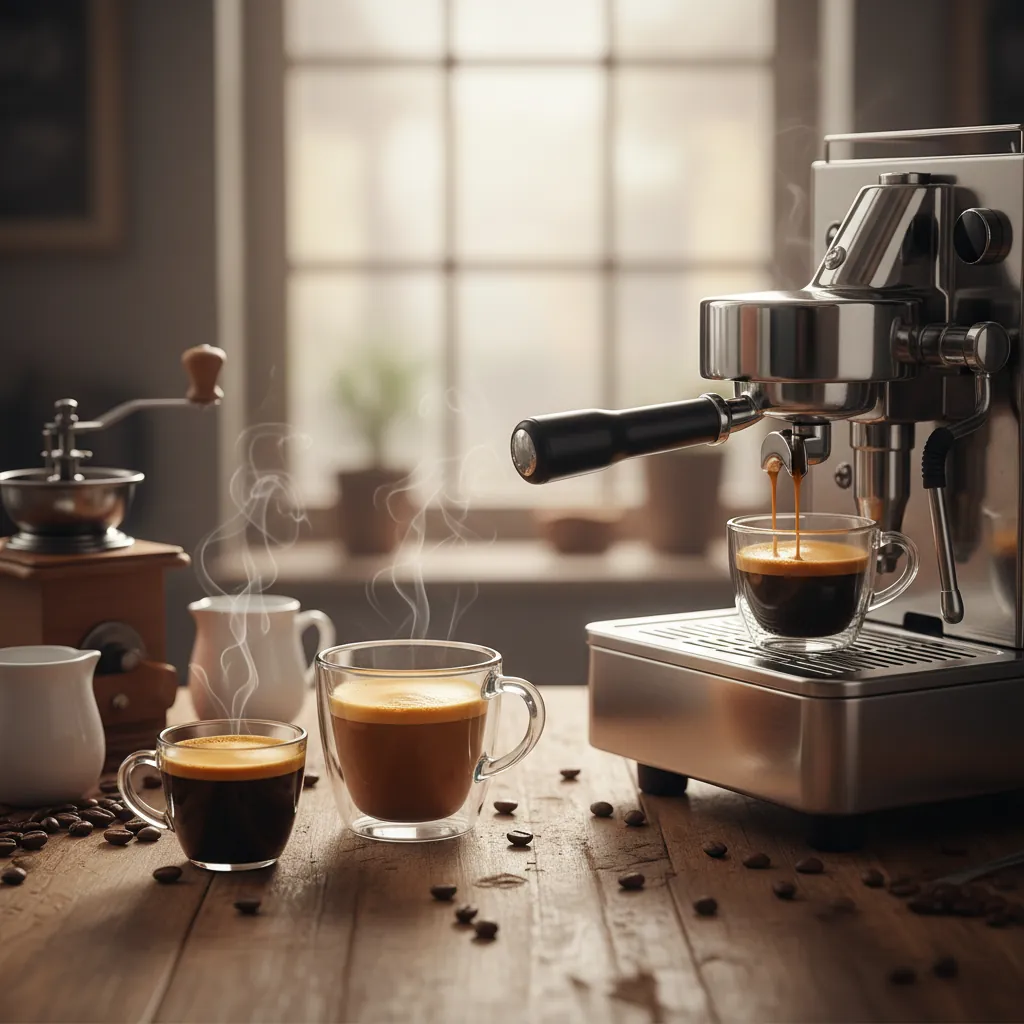
Ristretto vs Espresso: What’s the Difference?
Contents
- What You’ll Need
- Step-by-Step
- Tips
- Common Mistakes
- Variations
- Ristretto vs Espresso: Comparison Table
Ristretto and espresso are both concentrated coffee beverages brewed using an espresso machine, but they differ in water volume, extraction time, and flavor profile. A ristretto is a “restricted” shot, using half the water of an espresso and extracting for a shorter time (15–20 seconds), resulting in a sweeter, thicker, and less bitter cup. Espresso, brewed with more water and extracted for 25–30 seconds, offers a balanced, bold flavor with a broader spectrum of bitterness and acidity.
What You’ll Need
- Equipment: Espresso machine, coffee grinder (preferably with fine grind settings), tamper, scale.
- Coffee Amount: ~18g of coffee grounds for both ristretto and espresso.
- Grind: Fine grind, slightly finer for ristretto.
- Water Ratio: Ristretto: ~1:1 (18g coffee to ~18g liquid); Espresso: ~1:2 (18g coffee to ~36g liquid).
- Water Temperature: 92°C–96°C (197°F–205°F).
Step-by-Step
Making a Ristretto:
- Dose: Measure ~18g of coffee grounds.
- Grind: Use a slightly finer grind than espresso.
- Tamp: Press the grounds evenly into the portafilter.
- Brew: Extract for 15–20 seconds, yielding ~18g of liquid.
- Taste: Adjust grind and extraction time for sweetness and balance.
Making an Espresso:
- Dose: Measure ~18g of coffee grounds.
- Grind: Use a fine grind (slightly coarser than ristretto).
- Tamp: Press the grounds evenly into the portafilter.
- Brew: Extract for 25–30 seconds, yielding ~36g of liquid.
- Taste: Adjust grind and extraction time for balanced flavor.
Tips
- Use fresh, high-quality beans for optimal flavor.
- Pre-warm your espresso machine and portafilter to maintain consistent temperature.
- Regularly clean your grinder and espresso machine to avoid stale coffee oils.
Common Mistakes
- Inconsistent Tamping: Uneven pressure leads to uneven extraction.
- Wrong Grind Size: Too coarse or too fine affects extraction time and flavor.
- Over-Extraction (Espresso): Results in bitterness; stop extraction at 25–30 seconds.
- Under-Extraction (Ristretto): Leads to sourness; ensure enough flavor extraction in shorter time.
Variations
- Lungo: A longer shot (~1:3 ratio) with more water, yielding a larger, less concentrated beverage.
- Doppio: A double shot of espresso (~36g coffee to ~72g liquid).
- Espresso-Based Drinks: Use ristretto or espresso as a base for lattes, cappuccinos, or flat whites.
Ristretto vs Espresso: Comparison Table
| Parameter | Ristretto | Espresso |
|---|---|---|
| Coffee Dose | ~18g | ~18g |
| Water Volume | ~18g | ~36g |
| Brew Ratio | ~1:1 | ~1:2 |
| Extraction Time | 15–20 seconds | 25–30 seconds |
| Flavor Profile | Sweeter, thicker, less bitter | Balanced, bold, slightly bitter |
| Caffeine Content | Slightly less (~63mg) | Slightly more (~80mg) |
FAQ
Is ristretto stronger than espresso?
Ristretto tastes more intense due to its concentration, but espresso typically has slightly more caffeine because of its longer extraction time.
What’s the difference between ristretto and espresso?
Ristretto uses less water and a shorter extraction time, resulting in a sweeter, smaller shot. Espresso uses more water and a longer extraction, yielding a balanced, bold flavor.
How much water is in a ristretto?
A ristretto uses ~15–20ml of water, about half the volume of an espresso (~25–30ml).
Can I use ristretto in milk-based drinks?
Yes, ristretto’s concentrated sweetness pairs well with milk in drinks like cortados or flat whites.
Related guides
- How to Make a Cappuccino: Traditional and Modern Methods
- How to Make a Cortado
- How to Make a Flat White: A Complete Guide
- How to Make a Latte at Home: A Complete Guide
- How to Make a Macchiato