Arabica vs Robusta Coffee: Key Differences and Brewing Guide
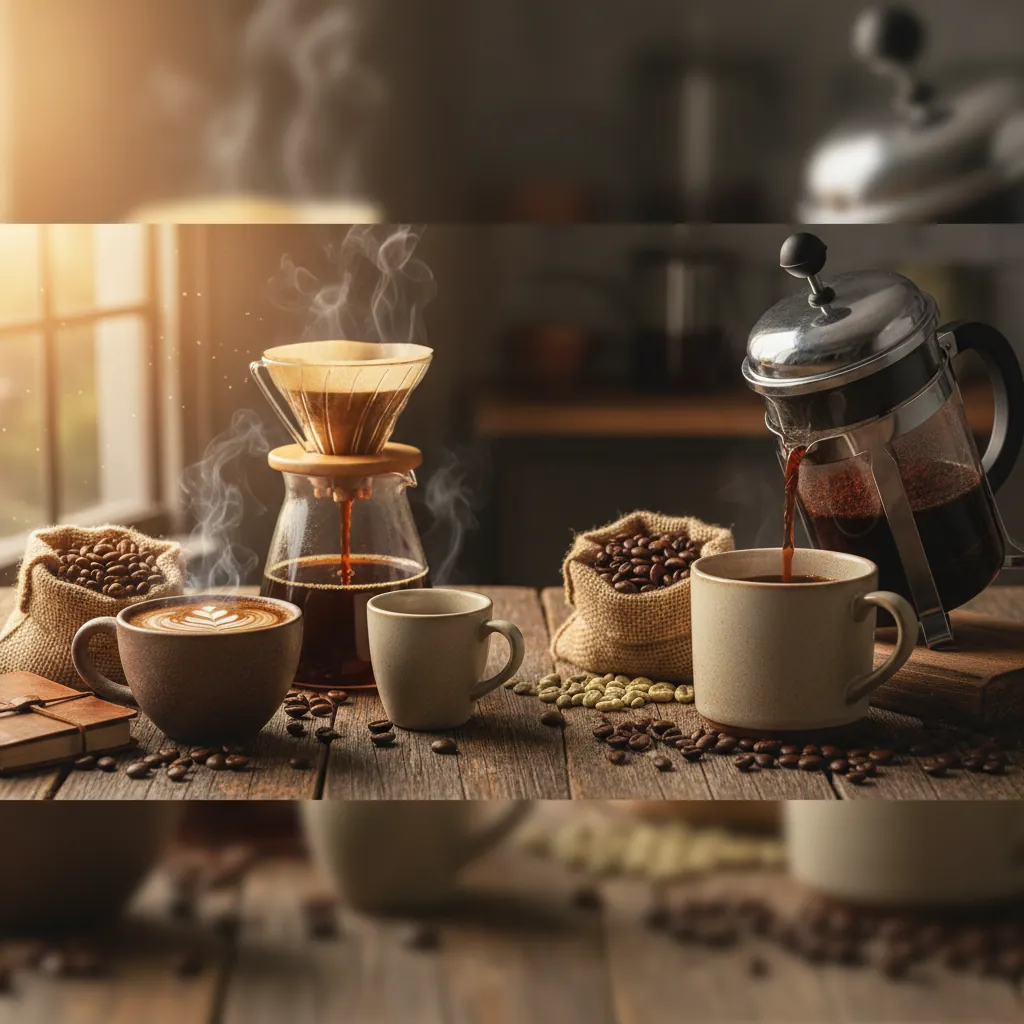
Arabica vs Robusta Coffee: Key Differences and Brewing Guide
Contents
- What You’ll Need
- Step-by-Step
- Arabica vs Robusta: Chemical and Flavor Comparison
- Tips
- Common Mistakes
- Variations
Arabica and Robusta are the two primary coffee species, differing in taste, caffeine content, and growing conditions. Arabica (Coffea arabica) is prized for its smooth, complex flavors and lower acidity, while Robusta (Coffea canephora) is stronger, more bitter, and has nearly double the caffeine. Arabica dominates specialty coffee markets, whereas Robusta is commonly used in instant coffee and espresso blends for its crema and affordability.
What You’ll Need
- Coffee beans: 20g Arabica or Robusta (adjust to taste)
- Grind size: Medium-fine (like table salt) for most methods
- Water: 300ml filtered water at 90-96°C (195-205°F)
- Equipment: Scale, burr grinder, brewer (e.g., French press, pour-over), kettle
Step-by-Step
- Measure and grind: Weigh 20g beans and grind to medium-fine.
- Preheat: Rinse filter/preheat vessel with hot water.
- Bloom: Pour 50ml water, wait 30 sec for gases to release (critical for Robusta’s denser beans).
- Brew: Slowly add remaining 250ml water in circular motions.
- Extract: Adjust time—2-4 min for pour-over, 4 min for French press.
- Serve: Decant immediately to avoid over-extraction.
Arabica vs Robusta: Chemical and Flavor Comparison
| Component | Arabica | Robusta |
|---|---|---|
| Caffeine | 0.8–1.4 g/100g | 1.7–4.0 g/100g |
| Chlorogenic acids | 6.5 g/100g (less bitter) | 10 g/100g (more bitter) |
| Lipids | 16.5 g/100g (smoother mouthfeel) | 10 g/100g |
| Flavor profile | Floral, fruity, acidic | Earthy, woody, harsh |
| Growing altitude | 600–2,200m | 0–800m |
Tips
- Arabica: Use slightly cooler water (90°C) to highlight acidity/fruitiness.
- Robusta: Extend bloom time (45 sec) to mellow harshness.
Common Mistakes
- Over-extraction: Robusta’s bitterness intensifies with long brews—reduce contact time.
- Stale beans: Robusta’s strong flavors mask staleness less than Arabica.
Variations
- Espresso: Blend 70% Arabica (brightness) with 30% Robusta (crema/body).
- Cold brew: Arabica alone for sweetness; Robusta adds depth but may overpower.
FAQ
Which is stronger, Arabica or Robusta?
Robusta has nearly double the caffeine (1.7–4.0g/100g vs Arabica’s 0.8–1.4g) and more bitter compounds.
Why is Arabica more expensive?
Arabica requires higher altitudes, shade, and is more vulnerable to pests, lowering yields. Robusta grows easier at lower elevations with higher output.
Can you taste the difference?
Yes: Arabica is sweeter with berry/citrus notes; Robusta is bold with rubber/peanut undertones.
Is Robusta unhealthy?
No—it has more antioxidants (chlorogenic acids) but also more acrylamide (conflicting studies on effects).
Related guides
- Light Roast vs. Dark Roast Coffee: Flavor, Brewing & Caffeine Explained
- Dark vs Light Coffee Roast: Key Differences and Best Brewing Methods
- How Is Decaf Coffee Made?
- How to Roast Coffee at Home: A Complete Beginner’s Guide
- How to Store Coffee Beans for Maximum Freshness