How to Roast Coffee at Home: A Complete Beginner’s Guide
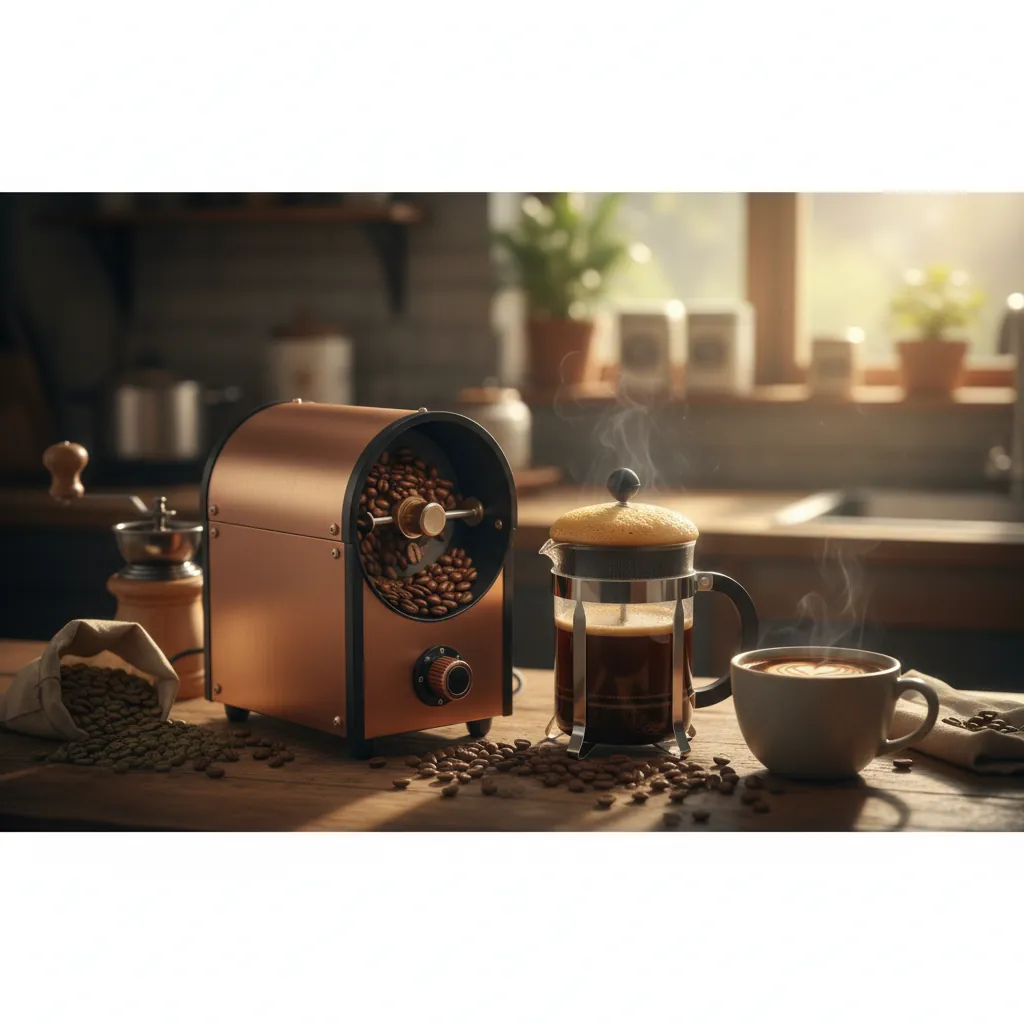
How to Roast Coffee at Home: A Complete Beginner’s Guide
Contents
Roasting coffee at home lets you control flavor, save money (green beans cost 3x less than roasted), and enjoy fresher coffee. You can start with basic tools like a popcorn popper, skillet, or grill, or invest in dedicated roasters ($75–$500). Key steps: heat green beans evenly, listen for “cracks” (signaling roast levels), cool quickly, and rest beans 12–24 hours before brewing.
What You’ll Need
- Green coffee beans (1/2–1 lb per batch; buy from trusted suppliers like Sweet Maria’s)
- Roasting equipment (choose one):
- Popcorn popper ($20–$90)
- Cast-iron skillet ($30–$50)
Or dedicated roaster (e.g., FreshRoast 540, $209+)
- Heat source: Gas grill, stovetop, or roaster with temperature control
- Thermometer (optional; target 400–450°F)
- Metal colander/cooling tray
- Timer
- Ventilation (outdoor space or open windows)
Step-by-Step
- Prep beans: Remove debris; rinse if needed (sources conflict—Source 3 recommends washing, Source 1 doesn’t mention it).
- Preheat equipment: Skillet/grill to 450°F; roaster as manufacturer directs.
- Add beans: Small batches (e.g., 1/2 cup for poppers) for even roasting.
- Agitate constantly: Stir skillet beans or crank popper to prevent burning.
- Listen for cracks:
- First crack (196–205°C/385–401°F): Light roast (stop now for bright, acidic coffee).
- Second crack (224–230°C/435–446°F): Dark roast (oily beans, smoky aroma).
- Cool immediately: Transfer to colander, stir, or use a fan (4–6 minutes to room temp).
- Rest beans: Store in airtight container 12–24 hours to degas.
Tips
- Roast outdoors to avoid smoke/smell indoors (Source 2).
- Track time: Light roast = ~8 min; dark = ~12 min (varies by method).
- Start with forgiving beans: Brazilian or Colombian for even roasting (Source 1).
Common Mistakes
- Overfilling: Causes uneven roasting (Source 1).
- Ignoring cracks: Leads to under/over-roasted beans (Source 5).
- Skipping cooling: Beans keep cooking, becoming too dark (Source 3).
Variations
- Popcorn popper: Fast, but limited control (Source 1).
- Grill/skillet: Cheap but labor-intensive (Source 2).
- Drum roaster: Even results, higher capacity (Source 1).
| Method | Cost | Batch Size | Control Level | Best For |
|---|---|---|---|---|
| Popcorn popper | $20–$90 | 1/4–1/2 lb | Low | Beginners |
| Skillet/grill | $30–$50 | 1/2–1 lb | Medium | Hands-on roasters |
| Dedicated roaster | $200–$500 | 1/2–1 lb | High | Enthusiasts |
FAQ
How dark should I roast?
Light roasts highlight origin flavors; dark roasts add smokiness. Try both (Sources 1, 4).
Can I roast coffee in an oven?
Yes, but results are uneven (Sources 1, 5).
How long do home-roasted beans last?
Peak flavor: 1–2 weeks (Source 1).
Why does my coffee taste grassy?
Under-roasted; extend time before first crack (Source 5).
Related guides
- Arabica vs Robusta Coffee: Key Differences and Brewing Guide
- Light Roast vs. Dark Roast Coffee: Flavor, Brewing & Caffeine Explained
- Dark vs Light Coffee Roast: Key Differences and Best Brewing Methods
- How Is Decaf Coffee Made?
- How to Store Coffee Beans for Maximum Freshness