Light Roast vs Dark Roast Coffee: Brewing Guide and Key Differences
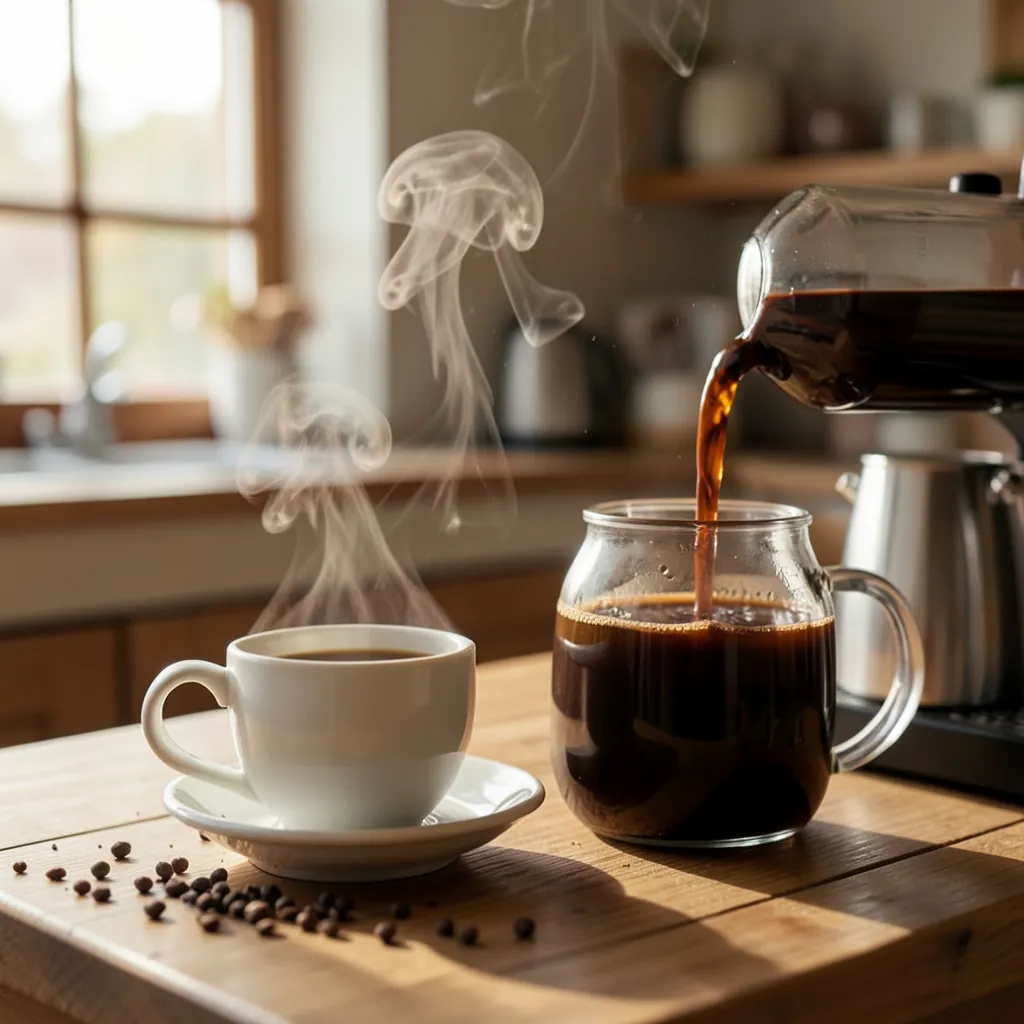
Light Roast vs Dark Roast Coffee: Brewing Guide and Key Differences
Contents
☕ Light roast and dark roast coffee offer distinctly different flavor profiles due to variations in roasting time and temperature. Light roasts preserve the bean’s origin characteristics with bright, fruity notes, while dark roasts develop deeper, smokier flavors through extended roasting.
Method: Pour Over (V60)
Difficulty: Beginner
Coffee-to-Water Ratio: 1:16 (light roast), 1:15 (dark roast)
Dose: 20 g coffee
Water: 320 g (ml)
Grind Size: Medium-fine (light), Medium (dark)
Water Temp: 94°C (201°F)
Brew Time: 3 minutes
Yield: One ~300 ml cup
TL;DR Recipe: Use slightly hotter water (94°C) and a finer grind for light roasts; opt for cooler water (90-92°C) and coarser grind for dark roasts to balance extraction.
What You Need
- Coffee beans: Light roast (Ethiopian/Yirgacheffe for fruity notes) or dark roast (Sumatran/Italian blend for chocolatey flavors)
- Grinder: Burr grinder for consistent particle size
- Brewer: Pour-over (V60, Chemex) for light roasts; French press or moka pot for dark roasts
- Scale: To measure coffee (20g) and water (320ml)
- Kettle: Gooseneck for precise pouring
Step-by-Step
- Grind: Light roast – medium-fine (table salt); dark roast – medium (sand).
- Rinse filter with hot water to eliminate paper taste.
- Bloom: Pour 50ml water, wait 30s (light) to 45s (dark) for degassing.
- Pour schedule:
- Light: Slow spiral pours (50ml every 15s).
- Dark: Faster pours (70ml every 10s) to avoid over-extraction.
- Drawdown: Aim for 3-minute total brew time.
Dialing It In
- Ratio: Light roasts excel at 1:16; dark roasts benefit from 1:15 for fuller body.
- Grind: Light requires finer grind to extract delicate flavors; dark needs coarser to reduce bitterness.
- Water temp: 94°C for light to highlight acidity; 90-92°C for dark to avoid ashy notes.
- Bloom time: Longer blooms (45s) help dark roasts release CO2.
🔧 Troubleshooting
| Symptom | Light Roast Fix | Dark Roast Fix |
|---|---|---|
| Too sour | Grind finer, hotter water | N/A (rare in dark) |
| Too bitter | Grind coarser, lower temp | Use cooler water, coarser grind |
| Weak/watery | Increase dose, finer grind | Brew longer (French press) |
| Channeling | Even wetting during bloom | Coarser grind, gentler pour |
💡 Pro Tips
- Swirl the bloom for even saturation, especially with dense light roasts.
- Preheat vessels thoroughly for dark roasts to maintain brew temperature.
- Water quality matters most for light roasts – use filtered water to highlight clarity.
- Rest dark roasts 7+ days post-roast to allow oil stabilization.
❓ FAQ
Q: Which has more caffeine, light or dark roast?
A: Nearly equal by weight; light roasts have slightly more by volume due to denser beans.
Q: Best brew method for light roast?
A: Pour-over (V60, Chemex) to highlight delicate floral/fruity notes.
Q: Why does my dark roast taste ashy?
A: Over-extraction – use cooler water (90°C), coarser grind, shorter brew time.
Q: Can I use pre-ground for light roast?
A: Not ideal – oxidation dulls bright flavors fast. Grind fresh if possible.
Q: Do dark roasts spoil faster?
A: Yes – surface oils oxidize quicker. Use within 2 weeks of roasting.
Q: Best ratio for espresso?
A: Dark roast: 1:2 (18g in, 36g out in 25-30s); light roast: 1:2.5 for longer extraction.
Related guides
- Arabica vs Robusta Coffee: Key Differences and Brewing Guide
- Light Roast vs. Dark Roast Coffee: Flavor, Brewing & Caffeine Explained
- Dark vs Light Coffee Roast: Key Differences and Best Brewing Methods
- How Is Decaf Coffee Made?
- How to Roast Coffee at Home: A Complete Beginner’s Guide